
What Is VPS Hosting? Benefits, Features & How It Works
A VPS (Virtual Private Server) is a secure, private space on a physical server for your website. It gives you your own dedicated resources, like RAM and CPU, so other websites can’t slow you down. It gives you the high speed, tight security, and complete control of a private server without the expensive price tag.
Today, we’ll answer the question of “what is VPS”, explain how it works and explore how it differs from other hosting types.
How does VPS hosting work?
VPS hosting works by using virtualization technology to partition a single physical server into multiple isolated virtual machines. A specialized software layer called a hypervisor sits on top of the physical hardware, dividing the CPU, RAM, and storage into private, independent slices. Each slice operates as a fully functional virtual private server, running its own operating system and managing its own applications without any resource leakage from neighboring sites.
To answer the question “what is VPS”, we need to look at how it works and how the physical machine gets split into these virtual environments.
1. Setting up the physical foundation
We begin with a high-performance physical server located in a secure data center. This machine contains the actual, physical hardware components—such as physical processor cores, memory modules (RAM), and lightning-fast solid-state drives (NVMe SSDs).
2. Installing the hypervisor
We install a specialized virtualization layer called a hypervisor directly onto this physical machine. Think of the hypervisor as an automated building architect. It is the software responsible for managing the physical resources and creating virtual replicas of them.
3. Carving out boundaries
The hypervisor partitions the physical hardware into separate, isolated slices. It maps out exactly how the physical server divides its total assets among these virtual environments. The hypervisor makes sure each individual VPS receives its own dedicated set of virtual processor cores (vCPU), RAM, and NVMe storage, while reserving a tiny portion of power for itself to run the virtualization system smoothly.
4. Constructing virtual walls
Once the hypervisor allocates these resources, the boundaries become completely locked down. Even though you are sharing the physical server frame, the virtual walls prevent any resource leakage. If another website on the same physical hardware experiences a massive traffic spike, their virtual server cannot cross the boundary to steal your RAM or slow you down.
5. Launching independent virtual operating systems
Because your virtual slice is completely isolated, it behaves exactly like a standalone server. You can install your own operating system like Ubuntu, CentOS, or Windows and run custom software configurations. You can even reboot your partition whenever you want without affecting anyone else sharing the physical machine.
Choosing the right hosting solution depends on your website’s traffic, performance needs, and budget. Learn more in our guide on how to choose the right hosting.
What is the difference between VPS and shared hosting?
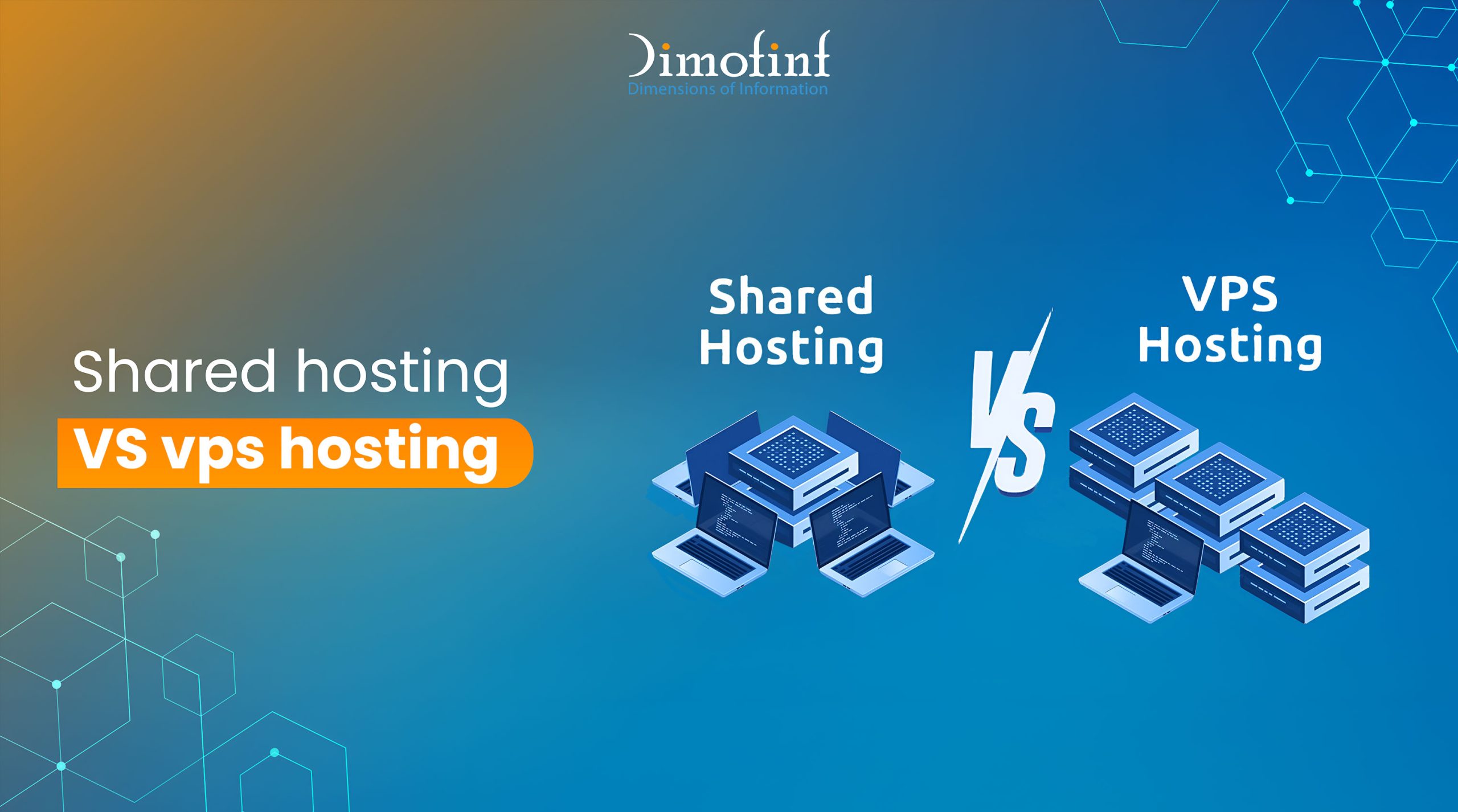
The difference between shared hosting and VPS is how you access the hardware resources of the physical server.
When you use shared hosting, you are placing your website on a server alongside hundreds of other websites. You share the server’s CPU, RAM, and storage with everyone else on that machine. If another website on your shared server experiences a massive traffic spike, your website will be slower in loading times or even crash.
On the other hand, you share the physical hardware with other users on VPS hosting, but the similarities end there. We use virtualization technology to carve out a dedicated portion of that server exclusively for you. You receive a guaranteed amount of RAM, CPU power, and storage that is yours to use regardless of what anyone else on the physical server is doing.
| Feature | Shared Hosting |
VPS Hosting |
| Resource Allocation | Pooled (shared by all) | Dedicated (reserved for you) |
| Performance | Variable/Unpredictable | Consistent/Reliable |
| Control | Restricted | Full Root Access |
| Security | Lower (shared risk) | High (isolated environment) |
| Cost | Most affordable | Moderate |
Who should use VPS hosting?
VPS hosting is the perfect choice for professional developers and active business owners who require administrative control and consistent performance to reach their digital goals.
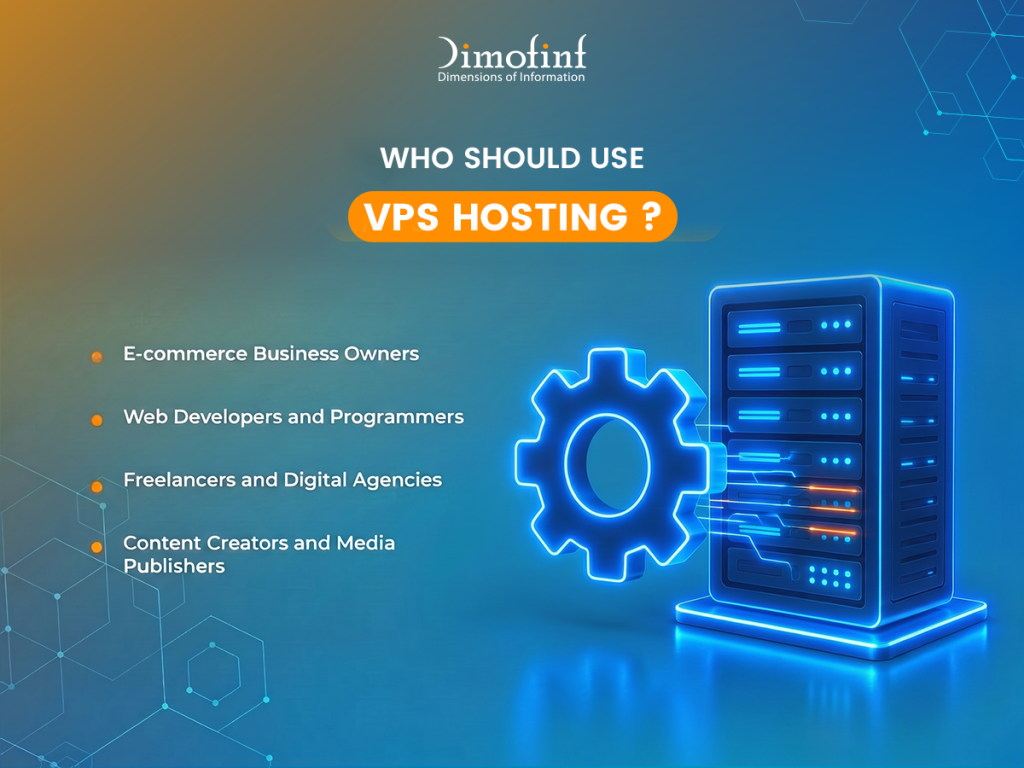
You should look into VPS if you fall into one of these specific roles:
- E-commerce Business Owners: A stable environment is needed to process customer payments without interruption. A VPS provides the dedicated resources that keep your checkout pages fast and secure, which is vital for maintaining customer trust and preventing abandoned carts.
- Web Developers and Programmers: You require full root access to build and test your applications. Because you need to install specific libraries, configure custom environments, or run unique software versions that standard shared hosting cannot support, a VPS gives you the freedom you need to work efficiently.
- Freelancers and Digital Agencies: A VPS acts as a command center, allowing you to organize your client projects on a single, powerful server while keeping each client’s resources isolated and performing well.
- Content Creators and Media Publishers: You manage high-traffic websites that depend on speed to retain visitors. When you have outgrown the limitations of basic hosting and your growth requires consistent, high-performance computing power to maintain your search engine rankings, a VPS is the natural choice.
What are the benefits of VPS hosting?
Benefits of VPS hosting are stable performance and greater control over your environment. You gain several technical advantages that directly impact your website’s stability and growth:
- Guaranteed Resources: On a shared server, your performance depends on the activity of other websites. With a VPS, you receive a guaranteed amount of RAM, CPU, and storage. These resources are reserved for you, so your website performance remains consistent even during traffic spikes.
- Full Root Access: You have complete control over your server environment. If you need to install specific software, modify server settings, or adjust security configurations, you can do it yourself. You are not restricted by the limitations of a shared hosting plan.
- Improved Security and Isolation: Your website lives in a virtualized container that is independent of other users on the same physical hardware. This means that if another user on the server experiences a security issue or a malware attack, your site is protected. You aren’t impacted by your neighbors’ technical problems.
- Scalability: Your needs will change as you grow. VPS hosting makes it easy for you to scale your resources up or down based on your current traffic. You can add more RAM or storage without needing to migrate your website to a new server or go through a complicated setup process.
- Better Reliability: Because your environment is isolated and your resources are dedicated, you see fewer crashes and better uptime. Your visitors enjoy a faster experience, which helps you maintain search engine rankings and keeps users on your site longer.
Can I host multiple websites on a VPS?
Yes, you can absolutely host multiple websites on a single VPS. In fact, consolidating several websites onto one virtual server is a common and highly cost-effective strategy for agencies, freelancers, and business owners.
Instead of paying for separate hosting plans for each project, you can use one VPS as a central hub for all your sites.
How does it works?
- Virtual Hosting: Your web server software (such as Nginx, Apache, or OpenLiteSpeed) uses virtual hosting to route incoming traffic for different domains to the correct folders and databases on your server.
- Management Tools: You can manage this manually through the command line, or use control panels like cPanel, Plesk, CloudPanel, or CyberPanel, which provide a graphical interface to add new websites, databases, and SSL certificates with just a few clicks.
- Resource Sharing: All your sites will share the CPU, RAM, and storage allocated to your VPS. As long as the combined traffic remains within your server’s limits, everything will run smoothly.
VPS vs Cloud
While VPS hosting and cloud hosting both provide virtualized environments, they differ in how they handle your data and resources.
VPS hosting is like a dedicated condominium unit. You own your space, have your own front door, and control what happens inside your unit. You share the physical server with others, but your unit is yours alone. It is a reliable, predictable, and cost-effective choice for stable traffic.
While cloud hosting is like drawing power from a massive interconnected utility grid. Your website does not live on just one machine; it draws resources from a cluster of many servers. If one piece of hardware has a problem, your site immediately shifts to another part of the network. This makes it highly resilient and capable of scaling instantly if your traffic surges.
| Feature | VPS Hosting | Cloud Hosting |
| Infrastructure | Partitioned single physical server | Network of distributed servers |
| Scalability | Fixed resources; requires upgrade | Dynamic; scales on-demand |
| Reliability | Good; tied to one physical host | Excellent; high redundancy |
| Pricing | Predictable, fixed monthly cost | Usage-based, pay-as-you-go |
| Management | Often requires technical knowledge | Often managed/automated |
Conclusion
After answering the question of “what is VPS” and exploring how it works, we can say that choosing the right hosting is about finding the balance between performance, control, and your budget.
When your website starts growing, a VPS hosting is the natural, logical next step. to have the dedicated resources and security you need without the cost or complexity of managing your own physical hardware.
At Dimofinf, we provide VPS hosting that prioritizes reliability and speed. We handle the server infrastructure so that you can focus on building your project, not troubleshooting it. Whether you are scaling an e-commerce store or running a custom application, our hosting gives you the space to grow.
Explore our VPS hosting plans today and see the difference that dedicated, stable resources make for your website.
What our customers say
Share this article
What Are AI Domains? Uses, Benefits, and Examples
shared hosting vs vps hosting: Which one is better for your business?
How to Check SEO Ranking: Track Your Google Keyword Positions

7 Key Factors to Consider When Choosing a Google Ads Agency

Best AI Website Builders in 2026 | Top Tools Compared
Website Development Company in Saudi Arabia | Custom Web Solutions
How to Speed Up a WordPress Website for Better Performance
How to buy a domain name in 5 steps?