
How to buy a domain name in 5 steps?
But before you build your digital project, you need to claim your address. That is your domain name. It is how your customers find you in the massive digital world.
Finding and buying the perfect domain can feel a bit overwhelming if you have never done it before. Don’t worry. It is actually much easier than it sounds. Let’s walk through the simple, stress-free process of “How to buy a domain name in 5 steps” securing your brand’s digital identity today.
What is a domain name?
A domain name is your website’s unique address on the internet that people type into their web browser’s address bar to visit your site. It is the friendly, human-readable name that represents your digital home, just like physical coordinates map to a real-world house. For example, when you want to visit our platform, you simply type our domain name into your browser instead of a complex string of technical codes.
The importance of choosing the right domain name
Choosing the right domain is critical because it directly influences your brand’s credibility, your visibility on search engines, and your overall marketing success.
Here is exactly why your choice of domain name matters so much:
- It forms the core of your online identity: If you pick a name that is confusing, long, or hard to spell, you make it incredibly difficult for your customers to return to your site or recommend it to their friends.
- It acts as your brand’s digital handshake: A great domain establishes immediate trust with your audience. When people see a clean, professional address that matches your business name exactly, they subconsciously feel safer entering their credit card details or signing up for your services.
- It directly impacts your search engine optimization (SEO): Search engines like Google look at your domain name to understand what your business is about and where you are located. Having a clean, memorable name that reflects your industry can improve branding and user trust, which may indirectly support your SEO efforts.
How can I buy a domain name in 5 steps?
When you are ready to claim your address, we recommend following these five steps to buy a domain name and make the process completely seamless:
- Brainstorm and research your target name.
- Choose a reputable domain registrar.
- Check domain availability.
- Select your domain extension and essential add-ons.
- Complete the registration and purchase.
Step 1: Brainstorm and research your target name.
Before you spend any money, you need to decide on the actual words you want to use. We suggest keeping your name short, easy to type, and very simple to pronounce so that people can easily share it by word of mouth. You should avoid hyphens, double letters, and numbers because they confuse people. Most importantly, do a quick trademark search online to make sure your chosen name does not belong to an existing business, which prevents legal trouble later on.
Step 2: Choose a reputable domain registrar.
A registrar is an officially accredited company that is authorized to assign and manage domain names. You want to pick a partner that offers transparent pricing, excellent uptime, and reliable customer support. If you are operating a business in the Middle East, we highly recommend registering through a local leader. This ensures you get high-quality support in your own language and easy access to local extensions like .sa for Saudi Arabia.
Step 3: Check domain availability.
Once you have your registrar and your list of favorite names, use their domain search bar to see if your preferred name is actually free. If your favorite .com extension is already taken by someone else, do not panic. You can try adjusting the name slightly, or you can explore alternative extensions that might actually fit your business better than a generic address.
Step 4: Select your domain extension and essential add-ons.
This is the step where you finalize your address’s ending. While .com is the global standard, local extensions like .sa or .eg are incredibly powerful for establishing local trust and boosting your local search engine optimization. During this step, your registrar will ask if you want to purchase add-ons. We strongly advise selecting Domain Privacy Protection. This keeps your personal contact details, phone number, and email address hidden from public databases, which prevents spammers from cluttering your inbox.
Step 5: Complete the registration and purchase.
Now you are ready to cross the finish line. You will fill in your account details, provide your contact information, and enter your payment details to complete the checkout. Once the payment goes through, the domain belongs to you. We recommend turning on Auto-Renew in your account settings immediately so you never accidentally lose ownership of your domain when your registration period expires next year.
Types of domains
When you are looking for a domain name, you will quickly notice that there are thousands of different endings available. These endings are called domain extensions or Top-Level Domains (TLDs). Choosing the right type of extension is just as important as choosing the actual name of your website because different extensions signal different things to both your visitors and search engines.
To help you choose the right one, we group domains into three main categories that you should know before you buy:
| Domain Type | Description | Common Examples | Best Used For |
| Generic TLDs (gTLDs) | The traditional, globally recognized standard extensions. | .com, .net, .org | Global businesses, startups, and brands targeting an international audience. |
| Country Code TLDs (ccTLDs) | Geographically targeted extensions tied to a specific country. | .sa, .ae, .eg | Local businesses, regional brands, and companies wanting to rank highly in local searches. |
| Modern gTLDs | Creative, industry-specific extensions launched to offer more options. | .tech, .store, .app | Modern startups, niche communities, portfolio sites, and specific online shops. |
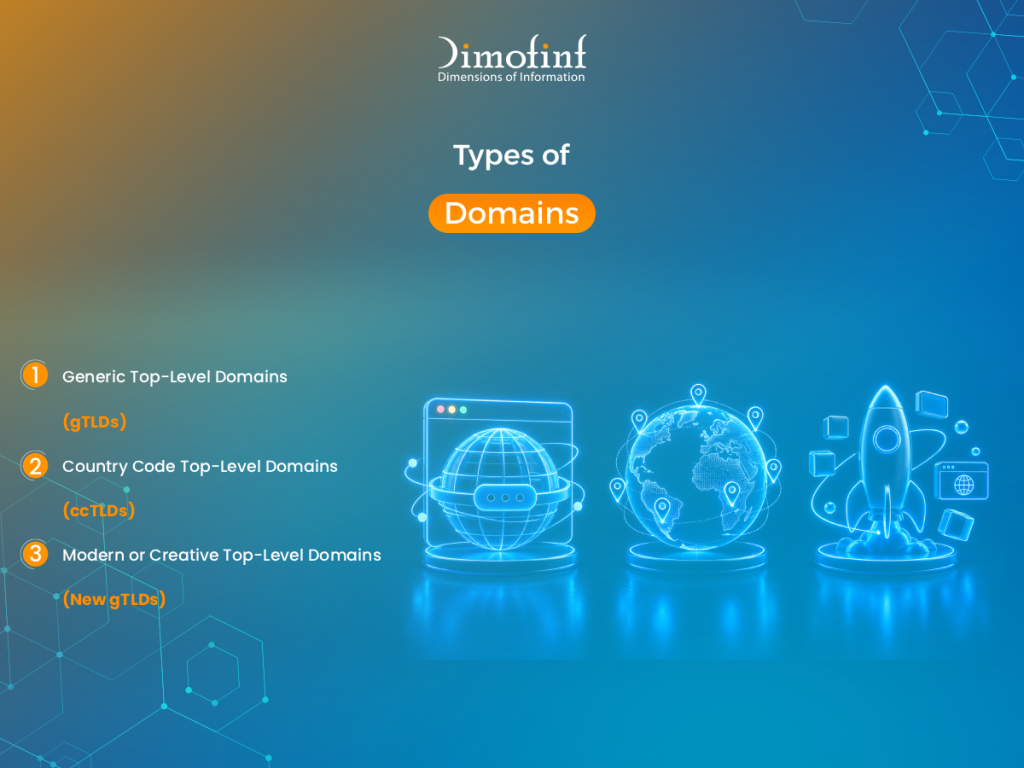
1. Generic Top-Level Domains (gTLDs)
These are the most common and widely recognized domain extensions on the internet, and almost anyone can register them. The classic example is .com which was originally meant for commercial businesses, but has now become the absolute default global standard. Other traditional options in this category include .net for network infrastructures and .org which is typically used by non-profit organizations.
2. Country Code Top-Level Domains (ccTLDs)
These extensions are strictly reserved for specific countries or geographic territories. They consist of two letters that represent the country. For example, .sa represents Saudi Arabia, .ae represents the United Arab Emirates, and .eg represents Egypt. Using a country code domain is an incredibly powerful strategic move if your business focuses on a specific local market. It helps search engines understand the geographic focus of your business, which boosts your local search engine visibility, and it instantly makes local customers feel more secure buying from you.
3. Modern or Creative Top-Level Domains (New gTLDs)
As the internet grew, finding a short, memorable .com domain became much harder. To solve this problem, hundreds of new, highly specific extensions were launched. These modern extensions allow you to be creative and tell people exactly what your website does before they even load the page. Examples include .tech for technology startups, .store for e-commerce shops, and .agency for service providers. These are excellent alternatives if your ideal generic name is already taken.
What is the first step to buy a domain name?
The first step to buy a domain name is to brainstorm a list of potential names and check their availability using a reputable domain registrar’s lookup tool. Before you invest any of your budget into professional logo design, branding, or business cards, you must verify that the digital address you want is actually free and not trademarked by another business.
Many people make the mistake of choosing a perfect business name first, only to discover later that the corresponding domain is either completely unavailable or being resold for a massive premium. By starting your journey with a quick domain availability search, you save yourself time, prevent potential legal headaches, and keep your options open.
How much does a domain name cost?
The cost of a domain name typically starts from $10 to $20 per year for a standard, brand-new registration. However, the exact price you pay depends on several factors, including the domain extension you choose, whether the name is already owned by someone else, and any promotional offers provided by your registrar.
When you plan your budget, you must look beyond the initial purchase price. Registrars often offer deep discounts for the first year of registration, but the annual renewal fee will return to the standard rate. Additionally, premium domains—highly desirable, short names that are already registered—can cost anywhere from hundreds to thousands of dollars to purchase from their current owners.
To help you estimate your costs, we have broken down the average pricing structures for different domain types and extensions in the table below:
| Domain Type | Average First-Year Price | Average Annual Renewal | Key Pricing Factors |
| Standard Generic (.com, .net) | $10 to $15 | $15 to $20 | Highly stable pricing; often heavily discounted during the first year of registration. |
| Country Code (.sa, .ae, .eg) | $25 to $50 | $25 to $50 | Prices vary by country registry; local presence or specific business licensing is sometimes required. |
| Modern Extensions (.tech, .store) | $2 to $10 (Promo) | $30 to $60+ | Often feature extremely cheap introductory rates, but renewal fees are significantly higher. |
| Premium Domains (Resold) | $100 to $10,000+ | Standard Renewal ($15 – $20) | One-time massive acquisition cost paid to the owner, but future renewals stay at standard rates. |
| Essential Add-ons (Privacy) | Free to $15 | Free to $15 | Many modern, customer-first registrars include WHOIS Privacy Protection completely free of charge. |
Conclusion
After answering “How to buy a domain name in 5 steps?”, securing your domain name is the official starting line of your business’s digital journey. It is the solid foundation upon which you will build your brand, connect with your audience, and grow your online presence. Because hundreds of thousands of domains are registered every single day, waiting even a few hours to make your decision could mean losing your perfect name to a competitor.
At Dimofinf, we help you claim your digital identity with our lightning-fast domain lookup tool, transparent pricing, and robust local support, secure and protect your perfect domain in seconds. Whether you are aiming for .com or wanting to build instant local trust with a .sa extension, we have the tools to get you started on the right foot.
Search for your dream domain on Dimofinf today and claim your space on the web before someone else does.
FAQs
Can I change my domain name later?
No, you cannot technically change or rename a domain name once it has been registered.
Is domain privacy protection important?
Yes, domain privacy protection is highly important because it prevents your personal contact information from being exposed to the public.
Can I buy a domain name without hosting?
Yes, you can absolutely buy a domain name without purchasing web hosting at the same time.
What our customers say
Share this article

Website Design Company in Riyadh | Professional Web Design
Cheapest Website Hosting: Compare the Best Affordable Hosts

What Is a Minecraft Server? How It Works & Server Types
How to Check SEO Ranking: Track Your Google Keyword Positions

Best AI Website Builders in 2026 | Top Tools Compared

Website Development Company in Saudi Arabia | Custom Web Solutions

What Is VPS Hosting? Benefits, Features & How It Works
How to Speed Up a WordPress Website for Better Performance