Best Programming Language for Web Development in 2026 (Top Picks)
Choosing the right programming language for your website can feel like standing in front of a giant menu in a language you don’t speak. You want something fast, secure, and easy to grow, but the options are endless.
But the truth is, there is no perfect language for everyone. The best choice depends entirely on what you want to build. Whether it’s a simple blog or a massive online store. In this guide, we’ll break down the top contenders simply to help you figure out what’s the best programming language for web development to pick the one that makes the most sense for your project.
What is the best programming language for web development?
When we look at what people are actually building today, the best programming language for web development is usually the one that fits your specific goals, your timeline, and how much traffic you expect to handle. JavaScript is essential for frontend development, while Python, PHP, and Java are commonly used for backend systems.
This means that if you are looking for a single name to crown as the best, you might be disappointed, because the industry moves too fast for one tool to stay on top forever. Here is the explanation:
JavaScript:
In most production environments, JavaScript is the undisputed heavyweight. It is the only language that runs directly in every web browser, which makes it nearly impossible to avoid if you want a site that feels truly interactive. Because so many people use it, you can find a pre-made solution for almost any problem you run into.
Python:
In real-world usage, we often see teams leaning toward Python or Ruby when they need to get a prototype off the ground quickly. These languages read a lot like English, which helps you move fast without getting bogged down in overly complex syntax. They are excellent for the back-end or the parts of the site that users never see, like databases and logic.
PHP:
You should also consider PHP. While some people act like it belongs in a museum, it still powers a huge chunk of the web, including WordPress. It is incredibly easy to host and very cheap to maintain.
What is the best programming language for web development backend?
When we mention the backend, we are really talking about the engine under the hood of your website. This is the part that handles your database, your user accounts, and all the logic that happens behind the scenes. The best programming language for web development’s list includes:
- js (JavaScript): Node.js is often the top choice for many modern developers to run JavaScript on the server. Because you are already using JavaScript for the front-end, you can use the same language for the back-end, which makes the whole project feel much more cohesive.
- Python: It is very readable and easy to write. It has a massive collection of tools, like Django or Flask, that do the heavy lifting for you.
- Go: Go (or Golang) is a newer favorite that we see appearing in high-traffic systems. It was built by Google to be incredibly fast and efficient, more rigid than Python, which means you have to be more careful while writing it, but it results in code that is very hard to break.
Why is JavaScript important for web development?
JavaScript is often called the language of the web because it is the only programming language that runs natively inside every modern web browser. Without it, the internet would look and feel like a collection of static digital posters rather than the interactive tools we use today.
- Full-Stack Capability: With Node.js, you can use the same language for the entire project, reducing the need for multiple specialized teams.
- Smooth Performance (Async): It can fetch data (like new emails) in the background while you continue to scroll or type, preventing the UI from freezing.
- Massive Ecosystem: Access to NPM, the world’s largest collection of pre-built tools, meaning you rarely have to reinvent the wheel.
- Modern Frameworks: Powerhouse tools like React, Vue, and Angular allow developers to build web apps that feel as fast and smooth as mobile apps.
Why is Python popular in web development?
Python is often cited as the world’s best programming language for web development for beginners and data experts alike due to its batteries-included philosophy.
Key Reasons for Python’s Popularity
- Readable Syntax: Python reads almost like plain English, which reduces the time spent debugging and makes it easy for teams to collaborate.
- Powerful Frameworks: Like Django, which is a high-level framework that handles security and database management automatically and Flask, the micro-framework that gives developers total control and flexibility for smaller apps.
- AI & Data Integration: Since most AI and Data Science tools are written in Python, it is the natural choice for websites that need recommendation engines or data visualizations.
- Massive Community Support: With millions of developers using it, any problem you encounter likely already has a solution posted online.
- Rapid Development: You can build a working prototype in Python with significantly fewer lines of code than in Java or C++.
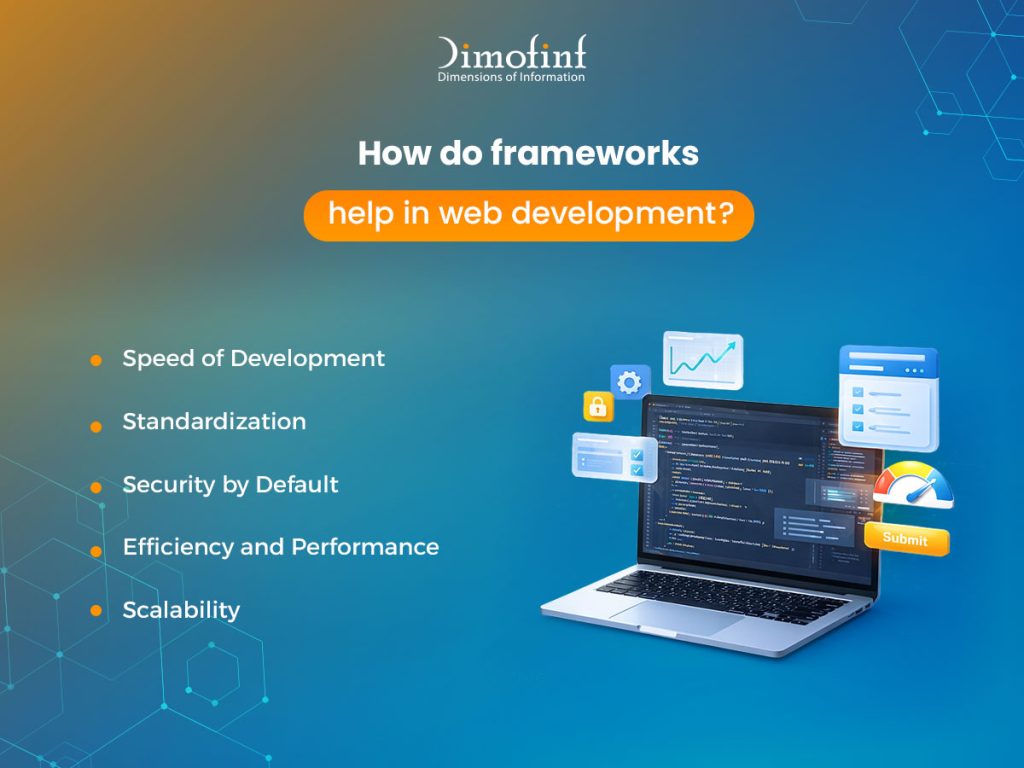
How do frameworks help in web development?
Think of a framework as a pre-built foundation for a house. Instead of making your own bricks and mixing cement, you start with the structure already in place. The Major Advantages for frameworks in web development are:
- Speed of Development: Frameworks provide boilerplate code for common tasks like user login, forms, and database connections. This allows developers to focus on unique features instead of repetitive setup.
- Standardization: Frameworks enforce a specific way of organizing code. This makes it much easier for new developers to join a project and understand where everything is located.
- Security by Default: Many frameworks include built-in protection against common web attacks (like SQL injection or Cross-Site Scripting). Using a framework is generally safer than writing all security logic from scratch.
- Efficiency and Performance: Modern frameworks are optimized for speed. They often include tools for caching (remembering data) and minimizing the size of the files sent to the user’s browser.
- Scalability: Frameworks like React (frontend) or Django (backend) are designed to grow. They provide the architecture needed to handle millions of users without the code becoming a disorganized mess.
How does project size influence the choice of programming language?
The best programming language for web development often depends on the scale of the application you are building. What works for a personal blog may fail for a global banking system. Here is a breakdown of how your project size influences the choosing programming language:
Small Projects (MVPs, Prototypes, Small Business Sites)
The priority here is speed to market and low cost. In this case, the language choice is Python (Flask) or Ruby on Rails, because these languages allow a single developer to build a functional site in days or weeks. The focus is on getting the idea in front of users quickly.
Medium Projects (E-commerce, SaaS Platforms)
The priority here is feature richness and maintainability.
In this case, the language choice is Node.js or Python (Django), because you need frameworks that handle complex user roles, payments, and data relationships reliably. Node.js is excellent here because it allows frontend and backend developers to speak the same language.
Large Projects (Social Networks, Financial Systems, Cloud Infrastructure)
The priority here is performance, security, and strict reliability, so you should choose Go (Golang), Java, or C#.
- Why: When handling millions of requests per second, efficiency matters. A language like Go can handle the same amount of traffic with much less server hardware than Python. Additionally, statically typed languages (like Java) help prevent bugs in massive codebases with hundreds of developers.
In the end, choosing the best programming language for web development is just the first step, implementing it with security, speed, and scalability is where the real challenge lies. Whether you are launching a fast-paced startup MVP or a complex enterprise system, Dimofinf provides the expert web development services you need to turn your vision into reality.
Our team specializes in modern tech stacks, ensuring your website isn’t just functional, but future-proof.
Want to know which technology is right for your specific goals? Contact Dimofinf today for a consultation, and let’s build something amazing together!
FAQs
Which programming language is commonly used for web development?
Which language is best for building dynamic websites?
What our customers say
Share this article
shared hosting vs vps hosting: Which one is better for your business?

7 Key Factors to Consider When Choosing a Google Ads Agency

Best Hosting for Ecommerce in Saudi Arabia | Fast & Secure Solutions

What Is Shared Hosting? A Beginner’s Guide to Web Hosting
7 Key Factors to Consider When Choosing a Google Ads Agency
What Is Java? Features, Uses & How It Works

Website Design Company in Riyadh | Professional Web Design

Cheapest Website Hosting: Compare the Best Affordable Hosts