
What Is an Integrated Digital Partner? Services & Benefits
What Is an Integrated Digital Partner? A Complete Guide for Businesses
As businesses increasingly rely on digital technologies, managing multiple systems, platforms, and IT services can become more complex. An integrated digital partner helps organizations address these challenges by coordinating technology solutions under a unified strategy that enhances operational efficiency and supports long-term business growth. In this article, you’ll learn What Does an Integrated Digital Partner Do, and Why Choose Dimofinf as Your Digital Partner
What Does an Integrated Digital Partner Do?
An integrated digital partner helps businesses align their technology strategies with business objectives, optimize daily operations, and achieve sustainable growth. Rather than managing technical needs separately, this partner adopts a unified approach to digital development, focusing on the following key responsibilities:
-
Assessing Business Needs:
Evaluates existing systems, identifies technical challenges, and recommends improvements aligned with business goals.
-
Developing Digital Strategies:
Creates a clear technology roadmap that aligns digital investments with current business requirements and supports long-term growth.
-
Coordinating Technology Solutions:
Ensures that different systems, platforms, and technologies work together efficiently to improve operational efficiency and streamline business processes.
-
Improving Operational Efficiency:
Identifies processes that can be automated to reduce manual tasks, enhance productivity, and streamline daily business operations.
-
Maintaining Security and Reliability:
Supports the implementation of cybersecurity measures, monitors digital system performance, and drives continuous improvements to enhance security and operational stability.
-
Supporting Business Growth:
Adjusts digital strategies and technology solutions to meet evolving business needs and support sustainable growth.
What Services Can an Integrated Digital Partner Provide?
An integrated digital partner offers technology services that help businesses streamline operations, enhance efficiency, establish reliable digital infrastructure, and support long-term growth. These services may include:
-
Web Hosting and Server Solutions:
Offers web hosting, VPS hosting, dedicated servers, and cloud hosting solutions to support reliable website and application performance.
-
Cloud Computing Services:
Offers flexible cloud infrastructure, data storage solutions, and computing resources to support growing workloads and evolving business requirements.
-
Website and Application Development:
Builds custom websites, web applications, and mobile applications tailored to specific business needs and user requirements.
-
Cybersecurity Solutions:
Offers security assessments, data protection solutions, and continuous threat monitoring to help safeguard digital assets against cyber threats.
-
Digital Marketing and SEO:
Helps businesses strengthen their online presence and reach target audiences through search engine optimization (SEO), content marketing, and digital advertising services.
-
Systems Integration and Automation:
Connects business applications and digital platforms while automating workflows to improve operational efficiency
-
Technical Support and Maintenance:
Provides ongoing system monitoring, troubleshooting, software updates, and maintenance services to improve system reliability and reduce operational disruptions
Integrated Digital Partner vs. Traditional IT Provider
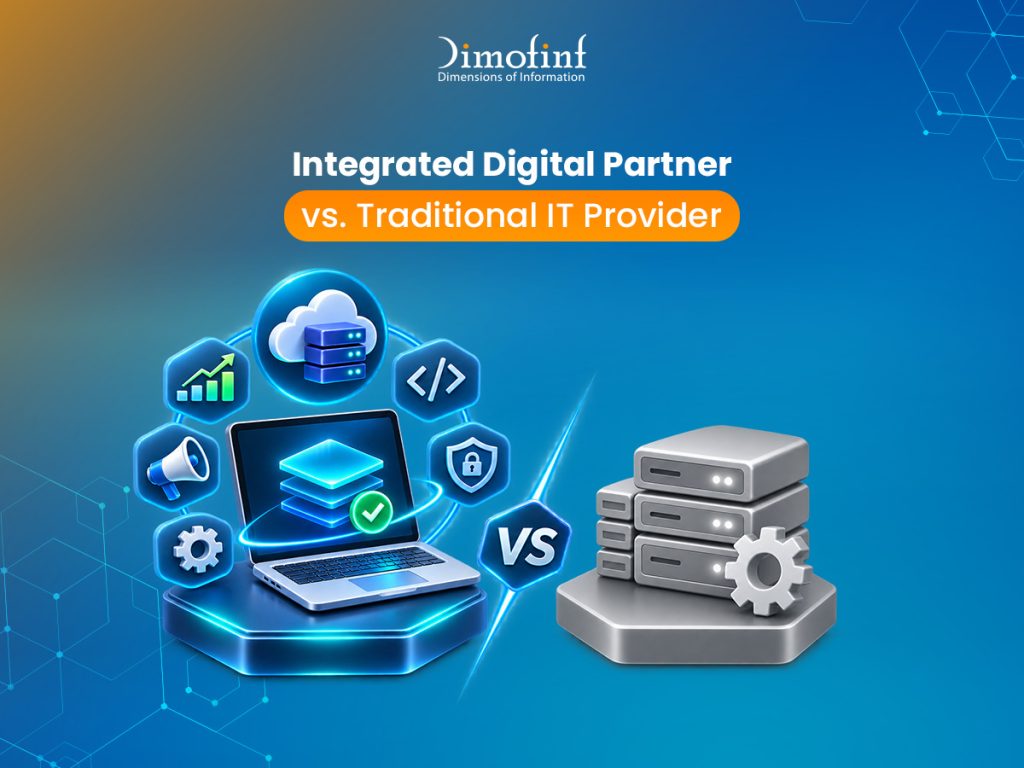
While both support business technology needs, an integrated digital partner generally takes a more comprehensive approach that aligns technology solutions with business objectives. The key differences between the two include:
-
Scope of Services:
A digital partner offers a comprehensive range of integrated technology solutions under a unified strategy, while a traditional IT provider often focuses on specific technical services.
-
Business Alignment:
A digital partner aligns technology solutions with business objectives, while a traditional IT provider often prioritizes predefined technical requirements
-
Approach to Problem-Solving:
A digital partner anticipates potential technical issues and takes preventive measures to reduce their likelihood, whereas a traditional IT provider may prioritize troubleshooting and resolving existing issues.
-
Long-Term Planning:
A digital partner develops technology strategies that accommodate evolving business needs, whereas a traditional IT provider may prioritize current technical and operational requirements.
-
Technology Integration:
A digital partner connects multiple digital systems and platforms to improve operational efficiency, whereas a traditional IT provider may manage individual systems or services separately.
-
Business Scalability:
A digital partner designs scalable technology solutions to accommodate future business growth, while a traditional IT provider may expand its services in response to specific business requirements.
Benefits for Small Businesses and Enterprises
Small businesses and large enterprises can benefit from a coordinated approach to technology management. Despite differences in their technical requirements, this approach helps organizations streamline operations, improve efficiency, and support long-term business growth. The main benefits include:
-
Cost Efficiency:
Enables businesses to manage IT budgets, reduce unnecessary expenses, and allocate technical resources more effectively.
-
Improved Operational Efficiency:
Simplifies business processes, reduces manual work, and helps teams improve productivity across daily operations
-
Access to Technical Expertise:
Enables businesses to benefit from specialized IT skills and technical expertise without the need for extensive in-house resources
-
Enhanced Security and Reliability:
Strengthens data protection, improves system monitoring, and supports preventive measures to reduce cybersecurity risks and maintain reliable digital operations.
-
Scalability and Flexibility:
Enables businesses to scale their technology resources and adapt their infrastructure as workloads increase and business requirements evolve.
-
Simplified Technology Management:
Streamlines the management of multiple technology services through centralized coordination, reducing administrative complexity and improving operational efficiency.
-
Faster Technology Adoption:
Helps businesses adopt and implement new digital solutions more efficiently, enabling them to stay competitive and adapt to changing market requirements.
How to Choose the Right Technology Partner?
Selecting the right integrated digital partner involves evaluating more than just the services offered. Businesses should consider technical expertise, service reliability, security standards, and the ability to meet current business needs while supporting future growth. The key factors include:
-
Technical Expertise and Experience:
Assess the provider’s experience, technical capabilities, and ability to deliver solutions that meet your business requirements.
-
Range of Services:
Choose a partner that provides technology services tailored to your business needs, from web hosting and cloud infrastructure to software development, cybersecurity, and ongoing technical support.
-
Security and Compliance:
Assess the provider’s cybersecurity standards, data protection policies, and compliance with applicable regulations to ensure they meet your business’s security and compliance requirements.
-
Service Reliability and Performance:
Assess the provider’s service level agreements (SLAs), uptime commitments, and system monitoring capabilities to determine whether its services meet your business’s performance and availability requirements
-
Scalability and Flexibility:
Evaluate whether the provider offers scalable technology solutions and adaptable infrastructure that can accommodate increasing workloads and support future business growth.
-
Technical Support and Communication:
Evaluate the provider’s support availability, response time commitments, communication channels, and ability to resolve technical issues efficiently.
-
Transparent Pricing and Long-Term Value:
Compare pricing structures, contract terms, and the long-term value of the services offered to ensure your investment aligns with your business needs and budget.

How Can an Integrated Digital Partner Support Government Entities?
Government entities require secure and scalable digital infrastructure to deliver reliable public services and manage their operations effectively. A technology partner can contribute to digital transformation initiatives by providing integrated solutions that enhance service delivery, strengthen data protection, and support operational continuity. Key areas include:
-
Digital Infrastructure Development:
Provides web hosting, cloud infrastructure, and server solutions to meet the operational and technical requirements of government websites, applications, and digital services.
-
Digital Transformation Support:
Helps government entities modernize existing systems, digitize workflows, and implement new technologies to streamline public sector operations
-
Cybersecurity and Data Protection:
Helps government entities strengthen cybersecurity, protect sensitive information, and maintain security practices aligned with relevant regulatory standards.
-
Systems Integration and Automation:
Integrates government systems and digital platforms while automating administrative processes to improve coordination, streamline workflows, and reduce manual work.
-
Public Service Accessibility:
Helps government entities develop and maintain digital platforms that make public services easier for citizens and businesses to access and use.
-
Scalability and Service Continuity:
Delivers flexible digital infrastructure and continuous technical support to help government entities accommodate growing demand for digital services while maintaining operational continuity.
Why Choose Dimofinf as Your Digital Partner?
Establishing a reliable and scalable digital presence requires more than individual technology services. Dimofinf serves as an integrated digital partner, offering web hosting, server infrastructure, cloud solutions, and ongoing technical support to help organizations manage their digital environments and support future growth. Key reasons to choose Dimofinf include:
-
Wide Range of Hosting Services:
Offers a variety of hosting solutions, including shared hosting, virtual private servers (VPS), dedicated servers, and cloud hosting, to accommodate different technical requirements and workloads.
-
Cloud and Server Infrastructure:
Provides cloud computing resources and server solutions to support business websites, applications, and digital platforms with varying computing and performance requirements.
-
Infrastructure Scalability:
Helps businesses choose hosting and server resources that can scale with increasing traffic and workloads while adapting to evolving business requirements.
-
Security-Focused Hosting Features:
Offers DDoS protection and SSL support on eligible hosting services to help protect websites from disruptive attacks and secure data transmitted over encrypted connections.
-
Technical Expertise and Server Management:
Provides specialized technical expertise and server management solutions to help businesses manage their server infrastructure and meet evolving technical requirements.
-
Continuous Technical Assistance:
Offers technical support services to help businesses troubleshoot hosting issues, manage technical challenges, and maintain reliable digital operations.
Conclusion
Choosing the right technology partner helps businesses establish reliable digital infrastructure, improve operational efficiency, and prepare for long-term growth. As an integrated digital partner, Dimofinf offers hosting services, cloud solutions, server infrastructure, and technical expertise to support your evolving business needs.
Discover Dimofinf’s services and get in touch with our team to explore the right solutions for your business
What our customers say
Share this article
What Is a DNS Server? How It Works and Its Types
Top 10 Web Hosting Companies 2027: Compared by Speed & Price
What Are AI Domains? Uses, Benefits, and Examples
shared hosting vs vps hosting: Which one is better for your business?
What Is a DNS Server? How It Works and Its Types
Top 10 Web Hosting Companies 2027: Compared by Speed & Price
What Are AI Domains? Uses, Benefits, and Examples
7 Key Factors to Consider When Choosing a Google Ads Agency