
shared hosting vs vps hosting: Which one is better for your business?
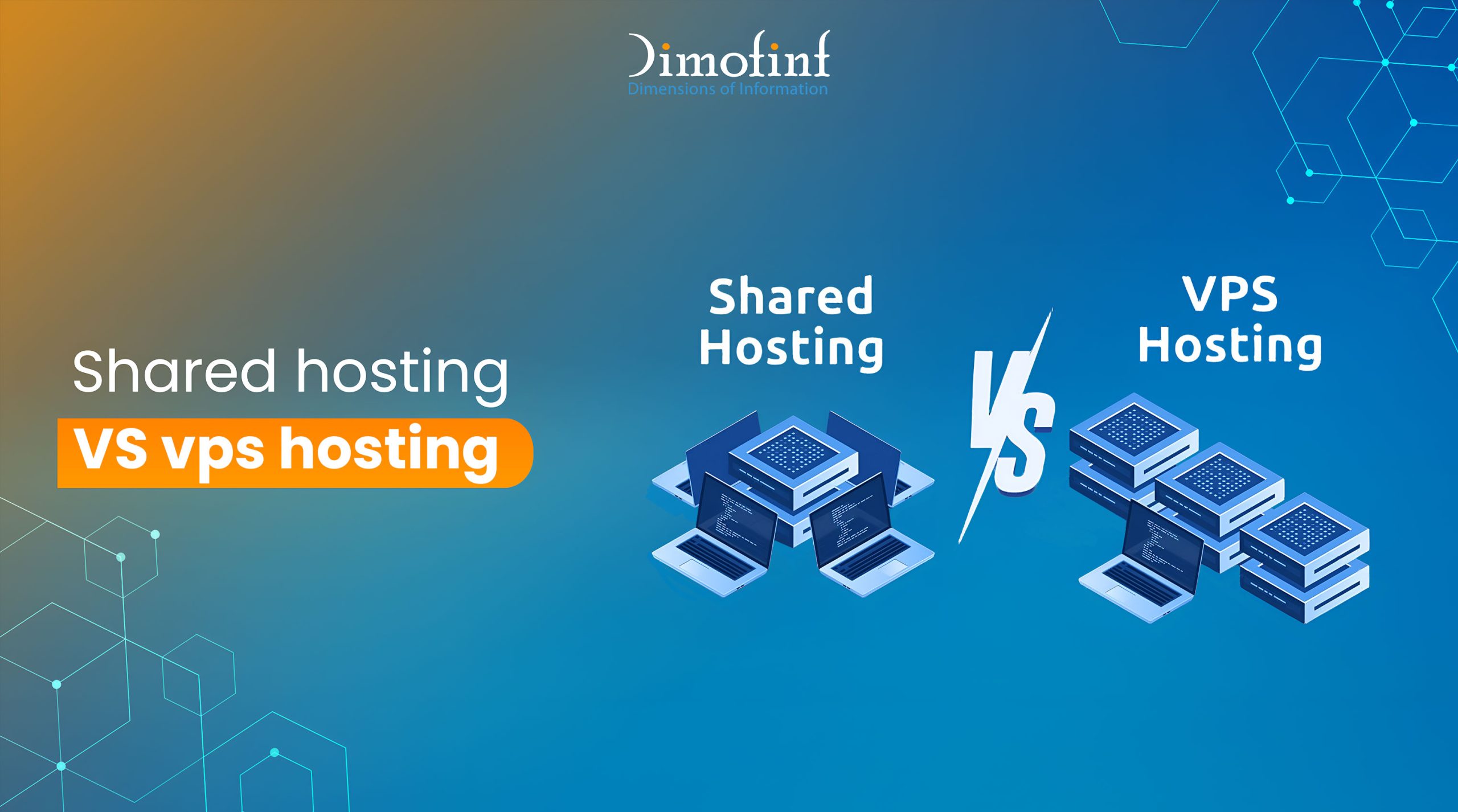
When it comes down to choosing the right hosting for your website, it can feel like a high stakes-puzzle, while you are looking for the budget-friendly and simplicity of shared hosting, you also need the high power and the dedicated resources of VPS hosting.
At Dimofinf, we know that your choice will directly impact your site’s performance and your visitors’ trust.
So today, we will break down the shared hosting vs vps hosting debate so you can choose the right one to scale your business.

What is the main difference between Shared Hosting and VPS Hosting?
To choose the best hosting for your website, we need to understand exactly how shared hosting vs vps hosting differ from each other in function and the way they manage resources as follows:
Resource Allocation
In Shared Hosting, you are sharing a server’s resources of CPU, RAM, and disk space with hundreds of other websites. If one of the websites neighboring got a lot of traffic, your site would slow down because a big share of the resources is being stretched thin.
On the other hand, VPS Hosting uses virtualization technology to carve out a dedicated slice of the server just for you. Even if you are physically sharing a machine, your resources are locked in, no matter what your neighbors are doing, so your site has its own guaranteed power.
Security and Isolation
Shared hosting is generally secure, but because you share a directory structure, a vulnerability in a neighbor’s website can occasionally pose a risk to the whole server.
In VPS hosting, your environment is completely isolated with your own operating system and firewalls, making it the preferred choice for businesses handling sensitive customer data and needing consistent performance.
Customization and Control
In shared hosting, if you needed to install a specific software or to change deep settings in the server, the nature of the hosting will limit you to protect the stability of other websites.
VPS gives you root access, allowing you to customize your server environment exactly how you need it to perform.
Which hosting type handles higher traffic better?
When it comes to handling higher traffic, the difference between shared hosting vs vps hostingbecomes clear; because VPS hosting is the best one to handle high traffic.
Shared hosting is excellent for starting out, but it has a hard ceiling. Because you are sharing the server’s overall resources with other users, a sudden surge in visitors can lead to slow loading times or even temporary site crashes.
Why is VPS hosting better?
A VPS is designed for growth. Because your resources are dedicated, your site can handle high-volume traffic without flinching.
- Consistency: Your page load speeds remain stable even during peak hours.
- Bursting: Many VPS plans allow for resource bursting, giving you extra power exactly when a traffic spike hits.
- User Experience: Faster load times lead to better engagement and higher conversion rates.
Choosing a VPS isn’t just about technical specs; it’s about reliability and peace of mind. With dedicated resources, enhanced security, and the freedom to scale as your audience grows, a VPS ensures that your hard work isn’t held back by your hosting environment.
Discover VPS hosting plans from Dimofinf and let’s get you moved to a setup that works as hard as you do.
How does hosting type affect website performance?
When comparing shared hosting vs vps hosting, website performance is key factor. It’s the first thing your visitors notice according to many research have proven that if your site takes more than six seconds to load, you risk losing over half of your audience. Your choice of hosting is the foundation of that speed.
Resource Allocation & Speed
Since the CPU and RAM are shared among hundreds of users in shared hosting, your website has to wait its turn for processing power. If another site is running a heavy script, your site’s response time will significantly increase, leading to a bad experience for your users.
In VPS Hosting, you are guaranteed a specific amount of RAM and CPU power that belongs only to you which results in stability and faster processing
What type of websites are suitable for Shared Hosting?
The match between shared hosting vs vps hosting is not over yet, shared hosting can be your entry point to the web, with its simplicity and low cost, which makes shared hosting suitable for the following websites:
- Personal Blogs and Portfolios: If you are a writer, photographer, or freelancer looking to showcase your work, then shared hosting is your best choice and with no need for heavy server processing.
- Startup Businesses: For local businesses like Salons, or Consultants that primarily need an online presence to show their services, contact information, and “About Us” page, shared hosting is their best choice without the high overhead costs.
- Testing and Development Websites: Developers often use shared hosting as an experimental field to test new ideas, themes, or plugins before moving them to a more robust production server.

Our Recommendation
Now we will settle the debate of shared hosting vs vps hosting and tell you our best when to choose each one of them:
- Choose Shared Hosting: If You are in the early stages, have a limited budget, and don’t want to deal with complex server management. It is perfect for blogs, personal portfolios, and startup sites looking for a low budget entry point.
- Choose VPS Hosting: If your site is experiencing consistent traffic growth, you are running an e-commerce store that requires high security, or you need to install custom software that standard hosting doesn’t support.
After comparing the fundamental differences between shared hosting vs vps hosting, it is clear that the right choice isn’t about which is better in a vacuum, but which is best for your current stage of growth.
Still have questions? Get in touch with our team of experts. Our team at Dimofinf is available 24/7 to help you analyze your website’s specific requirements and select the plan that best secures your business’s future.
FAQs
Does VPS provide dedicated CPU and RAM?
Share this article

How to Create a Website Using Free Web Hosting Step by Step
What Is a Ransomware Attack? Definition, Examples & Prevention

Best types of website design for your business in 2026
Everything You MUST know about DoS and DDoS attack
How to Create a Website Using Free Web Hosting Step by Step
Everything You MUST know about DoS and DDoS attack

How to find your best cheap website hosting in 2026