
Cyber Security Threats You Need to Know
In today’s digital world, cyberattacks are no longer rare or highly technical events—they are everyday risks that affect businesses and individuals alike. From phishing and identity theft to ransomware, DDoS, and zero-day exploits, Cyber security threats continue to grow in scale and sophistication.
Understanding cyber security threats examples and knowing how to respond to them is no longer optional; it is a core part of protecting data, systems, and online identities. This article explores the most common threats, how they work, and the practical cyber security threats and solutions that help reduce risk in an increasingly connected environment.
What are the most common types of cybersecurity threats faced by businesses today?
Businesses today face a wide range of Cyber security threats that can disrupt operations, steal sensitive data, and cause serious financial losses. Below are the most common threats, explained in a clear and practical way, with real-world relevance for modern organizations.

Phishing Attacks
Phishing is one of the most widespread cyber security threats examples targeting businesses. Attackers send fake emails or messages that appear legitimate to trick employees into sharing passwords, financial details, or access credentials. These attacks often exploit human error rather than technical weaknesses, making employee awareness a critical part of cyber security threats and solutions.
Ransomware
Ransomware is a dangerous form of malware that encrypts company data and demands payment to restore access. It can bring business operations to a complete halt within minutes. Among all Cyber security threats, ransomware is especially damaging because it combines data loss, downtime, and financial extortion in a single attack.
Malware Infections
Malware includes viruses, spyware, and trojans that infiltrate systems through malicious downloads or compromised websites. Once inside the network, malware can monitor activity, steal confidential information, or weaken system security. These cyber security threats examples often go unnoticed until serious damage has already occurred.
Insider Threats
Not all Cyber security threats come from outside the organization. Insider threats occur when employees, contractors, or partners misuse their access intentionally or accidentally. Weak access controls and poor monitoring can turn trusted users into serious security risks, highlighting the need for strong cyber security threats and solutions.
Unpatched Software Vulnerabilities
Outdated software creates easy entry points for attackers. When businesses delay security updates and patches, they expose themselves to known Cyber security threats that hackers actively exploit. Regular patch management is one of the simplest yet most effective ways to reduce risk.
Distributed Denial-of-Service (DDoS) Attacks
DDoS attacks overwhelm business websites or online services with massive traffic, making them unavailable to users. While these attacks may not always steal data, they cause service disruptions, lost revenue, and damage to brand reputation. They remain common cyber security threats examples for businesses that rely heavily on online availability.
Together, these risks show why understanding Cyber security solutions is essential for any business aiming to protect its data, systems, and reputation in today’s digital landscape.
How do phishing attacks work?
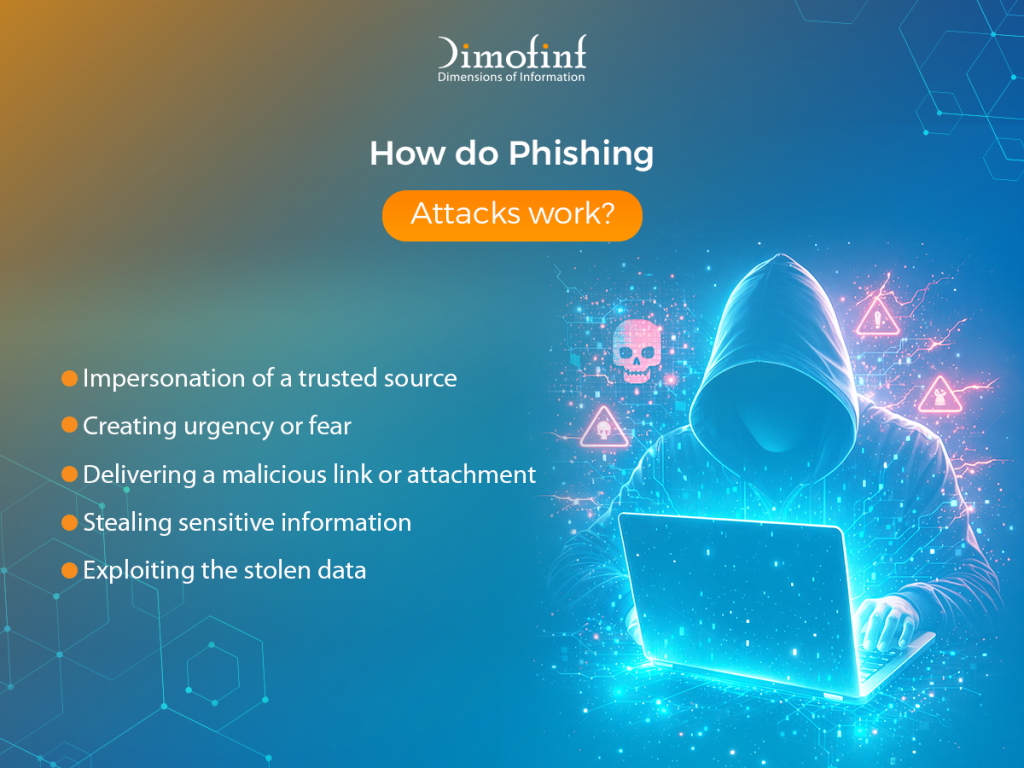
Phishing attacks are one of the most dangerous Cyber security threats because they focus on manipulating people rather than exploiting technical flaws. Below is a clear step-by-step breakdown of how phishing attacks usually work, with simple explanations for each stage.
Impersonation of a trusted source
Attackers pretend to be legitimate organizations, managers, banks, or service providers. They copy logos, email styles, and even domain names to make the message look real. This step is a common pattern in many cyber security threats examples, as trust is the main weapon used against victims.
Creating urgency or fear
The phishing message often includes urgent language such as “your account will be locked” or “immediate action required.” This psychological pressure pushes users to react quickly without verifying the message. Exploiting emotions is a key reason phishing remains one of the most effective Cyber security threats.
Delivering a malicious link or attachment
Victims are asked to click on a link or download an attachment. The link usually leads to a fake website, while the attachment may contain malware. These methods clearly show how cyber security threats examples can bypass technical defenses through simple user interaction.
Stealing sensitive information
Once on a fake website, users are prompted to enter login credentials, credit card details, or personal data. The attackers capture this information and use it to access systems, steal money, or launch further attacks. This stage highlights the real business impact of Cyber security threats.
Exploiting the stolen data
After collecting credentials, attackers may access company systems, move laterally within the network, or sell the data on the dark web. This step often leads to larger attacks such as ransomware, proving why phishing is closely linked to broader cyber security threats and solutions strategies.
Understanding these steps helps businesses recognize phishing attempts early and implement effective cyber security threats and solutions to protect employees, data, and digital assets.
How can businesses defend against Distributed Denial of Service (DDoS) attacks?
Distributed Denial of Service (DDoS) attacks are serious Cyber security threats that aim to overwhelm business websites, servers, or online services with massive amounts of fake traffic. Below are the most effective ways businesses can defend against these attacks, explained clearly and in practical terms.
Using DDoS protection services
Specialized DDoS protection tools can detect and filter malicious traffic before it reaches business systems. These services analyze traffic patterns in real time and block abnormal activity. This approach is one of the most effective cyber security threats and solutions used by organizations that depend on high service availability.
Implementing traffic monitoring and analytics
Continuous monitoring helps businesses identify unusual spikes in traffic early. By understanding normal traffic behavior, security teams can react quickly when a DDoS attack begins. Many cyber security threats examples show that early detection significantly reduces downtime and damage.
Scaling infrastructure and using cloud-based resources
Cloud platforms allow businesses to scale bandwidth and resources during traffic surges. This flexibility helps absorb attack traffic without crashing systems. It is a practical response to Cyber security threats that target system availability rather than data theft.
Applying rate limiting and firewall rules
Rate limiting restricts how many requests a single user or IP address can send in a given time. Firewalls can block suspicious IPs and regions known for attack traffic. These technical controls are core elements in defending against common cyber security threats examples.
Creating an incident response plan
A clear DDoS response plan ensures that technical teams know exactly what to do during an attack. This includes communication steps, mitigation actions, and coordination with service providers. Strong planning is a vital part of long-term cyber security threats and solutions strategies.
By combining proactive monitoring, scalable infrastructure, and clear response procedures, businesses can significantly reduce the impact of DDoS attacks and strengthen their overall defense against evolving Cyber security threats.
What are the top signs that your business might be under a cyberattack?
Many Cyber security threats are designed to stay hidden, which is why noticing early warning signs is so important. Below are the most common indicators, explained briefly and clearly.
Unusual system slowdowns or downtime
If systems suddenly become slow or crash without a clear reason, this may indicate malware activity or traffic overload. These issues are common cyber security threats examples that directly affect business operations.
Suspicious login activity
Repeated failed logins, access from unknown locations, or logins at unusual times often point to stolen credentials. This is a clear sign of active Cyber security threats targeting user accounts.
Unknown files or software
New programs or files appearing without approval can indicate a malware infection. Many cyber security threats examples rely on silently installing tools to gain long-term access.
Increase in phishing emails
A sudden rise in suspicious emails, especially from internal accounts, may signal an ongoing attack. Phishing remains one of the most common Cyber security threats used to spread malware or steal data.
Unusual network traffic
Unexpected spikes in network activity can mean data is being sent outside the organization or systems are being controlled remotely. Monitoring traffic is a key part of effective cyber security threats and solutions.
Recognizing these signs early allows businesses to react quickly and apply the right cyber security threats and solutions before serious damage occurs.
What is a zero-day attack, and how can companies defend against them?
A zero-day attack is one of the most serious Cyber security threats, as it takes advantage of software weaknesses that are not yet known or fixed. Below is a clear breakdown, divided into two parts: what a zero-day attack is, and how companies can defend against it:
What is a zero-day attack?
- Exploiting an unknown vulnerability
A zero-day attack happens when attackers discover a hidden flaw in software before the developer is aware of it. Because this weakness is unknown, it becomes an easy target for Cyber security threats. - Attacking before a patch is available
The attack starts before any security update is released, leaving systems exposed. This makes zero-day incidents some of the most dangerous cyber security threats examples for businesses. - Highly targeted and stealthy attacks
Zero-day attacks are often carefully planned and difficult to detect. They may focus on specific companies or industries, showing how advanced modern Cyber security threats have become.
How can companies defend against zero-day attacks?
- Using behavior-based security tools
Since traditional antivirus tools may not recognize unknown attacks, behavior-based monitoring helps detect unusual activity. This approach is a key part of effective cyber security threats and solutions. - Applying layered security controls
Network segmentation, strong access control, and limited user privileges help reduce the impact of an attack. These defenses are proven cyber security threats examples of how prevention limits damage. - Maintaining continuous monitoring and response plans
Real-time monitoring and a clear incident response plan allow companies to act quickly once a threat appears. Fast response is essential for managing evolving cyber security threats and solutions.
By separating understanding from defense, businesses can better prepare for zero-day Cyber security threats and reduce their overall risk.
How can individuals protect themselves from phishing and identity theft online?
Phishing and identity theft are among the most common Cyber security threats individuals face online today. These attacks often rely on deception rather than technical skills, which makes personal awareness and good habits essential. Below are simple and effective steps individuals can take to stay safe.
Being cautious with emails and messages
Individuals should avoid clicking on suspicious links or downloading unexpected attachments, even if messages appear to come from trusted sources. Many cyber security threats examples start with a single misleading email designed to steal personal information.
Using strong and unique passwords
Creating different passwords for each account reduces the risk of multiple accounts being compromised at once. This basic habit plays a major role in reducing Cyber security threats and solutions related to account takeovers.
Enabling multi-factor authentication (MFA)
MFA adds an extra layer of security by requiring a second form of verification, such as a code sent to a phone. This makes it much harder for attackers to use stolen credentials, even in common cyber security threats examples.
Checking website URLs carefully
Fake websites often look almost identical to real ones. Verifying the website address and security indicators helps prevent identity theft caused by Cyber security threats.
Keeping devices and software updated
Regular updates fix known security vulnerabilities that attackers exploit. Staying updated is one of the simplest cyber security threats and solutions for personal online safety.
By following these basic practices, individuals can significantly lower their risk of falling victim to phishing and identity theft while protecting themselves from everyday Cyber security threats.
As Cyber security threats continue to evolve, awareness and proactive protection remain the strongest lines of defense. Whether it is recognizing phishing attempts, responding to DDoS attacks, or reducing exposure to zero-day vulnerabilities, the right combination of knowledge, technology, and strategy makes a real difference. For businesses looking to strengthen their digital security, working with a trusted technology partner is essential.
At Dimofinf, advanced hosting solutions, secure infrastructure, and proactive security practices are designed to help organizations stay resilient against modern cyber security threats examples. By combining reliable technology with smart cyber security threats and solutions, businesses can protect their data, maintain trust, and operate confidently in today’s digital landscape.
Be honest, do you really think your data is safe right now?
Comment “TEST” below, and we’ll check how secure your website or digital presence is against today’s cyber security threats FOR FREE
Share this article

How to Create a Website Using Free Web Hosting Step by Step

shared hosting vs vps hosting: Which one is better for your business?
What Is a Ransomware Attack? Definition, Examples & Prevention

Best types of website design for your business in 2026
What Is a Ransomware Attack? Definition, Examples & Prevention