
Best types of website design for your business in 2026

When we mention web designing today, we aren’t discussing colors or fonts, we’re talking about the first impression you leave on every potential customer; because websites are the interface of your business and your powerful salesperson. Whether you’re exploring new website design ideas or building it from scratch, choosing the right structure is vital for your success.
In this guide, we’ll show the best types of website design and the concepts you need to know based on our +20 years of experience in web development to find the perfect fit to help your brand stand out and succeed.
What are the main types of website design?
In the modern digital landscape, the chosen type of website design determines how well your site ranks on search engines and how much users trust the brand. Here are the main types of website design:

Responsive Web Design (RWD)
This is the industry standard. A responsive site uses fluid grids and CSS media queries to ensure the layout responds to the user’s screen size.
The best advantage in responsive web design is that search engines prioritize it because it provides a consistent User Experience (UX) which helps your website ranking in the first SERP.
Adaptive Web Design
Adaptive design involves creating several fixed-width layouts for specific screen resolutions. The server detects the device and serves the appropriate layout.
Although it’s more complex to build, it reflects a strong performance optimization and allows you to tailor the experience to specific devices, whether that’s delivering enhanced features for high-end tablets or ensuring smooth performance on some old versions of mobile phones.
Static Website Design
These websites are built with fixed HTML code, meaning every visitor will see the same content. They’re very fast and highly secure, which make them a reliable choice for you especially when you provide informational pages or portfolios of your work.
Dynamic Website Design
Dynamic websites depend on server-side technologies such as PHP or Node.js, along with databases, to generate real time content. You’ll typically see this in action with social media feeds or online stores where information constantly updates to deliver their users fresh and personalized content.
Single-Page Applications (SPAs)
Single Page Applications load a single document and update parts of it without refreshing the entire page like Gmail or Netflix .
They deliver a smooth and seamless experience that feels more like using desktop software than browsing a traditional website. However, building them properly requires strong expertise in modern JavaScript frameworks, especially to maintain accessibility and ensure they stay optimized for search engines.
E-commerce Design
This is the only type among all the types of website design that is tailored for online sales focusing on product catalogs, shopping carts, and secure checkout processes.
A professional e-commerce design must include security signals like SSL certificates, clear return policies, and verified reviews to satisfy both the user and search engine quality guidelines.
Why is website design important for business success?
Website is often the first point of contact between your business and a potential customer, which makes its design is not just a visual choice; it is a important for your business asset for the following reasons:
- Your visitors decide if you are a professional they can trust or a hobbyist they should skip within seconds based on your website design, so clean and modern design tells people you’re the real deal before they even read a single word.
- Search engines like Google send people to sites that load fast, work on mobile, and are easy to navigate, so when your website design is correct, you’re making it easy for search engines to recommend you.
- With a professional design that uses clear visual paths, you can lead people toward your goal whether it is getting someone to call you, sign up for a newsletter, or buy a product without making them feel lost or pressured.
- Using the same colors, fonts, and vibe across your site makes you recognizable when a customer sees your logo elsewhere, they’ll remember the smooth, professional experience they had on your site.
How do you choose the right type of website design?
To choose the right type of website design, ask yourself these questions to narrow down what your project actually needs.
What is the main objective of your site?
Think about the one thing you want a visitor to do:
- Is it reading? If you’re a consultant or a writer, then you need a Static or Responsive layout that prioritizes clean text and fast loading.
- Is it interacting? If you’re building a tool like a custom calculator, a dashboard, or a social platform, then you need a Single-Page Application (SPA) to make your site feel like a tool rather than a page.
- Is it sales? E-commerce almost always requires a Dynamic setup. You need a system that can handle inventory, prices, and user accounts in real-time.
2. Where is your audience hanging out?
While we want every site to work everywhere, your primary audience’s habits should dictate your focus:
- If your users are mostly B2B professionals sitting at office desks, you can afford a more expansive, feature-rich Responsive layout.
- If you’re a restaurant or a local service, then 90% of your traffic will be on a phone. In this case, you might even consider Adaptive Design to ensure the mobile experience is stripped down to just the essentials, like Click to Call or Directions.
3. What is your budget limit?
Be honest about your budget and your timeline:
- A Static Responsive site is your best friend. It’s the fastest to build, the cheapest to host, and gets you online with zero fuss
- If you have the resources and a complex business model, a Dynamic SPA is a powerful engine that can grow with you for years, even if it takes longer to tune up at the start.
How does website design affect user experience?
User Experience (UX) is the bridge between a visitor arriving at your site and actually becoming a customer. Here is how types of website design choices directly impact the user experience:
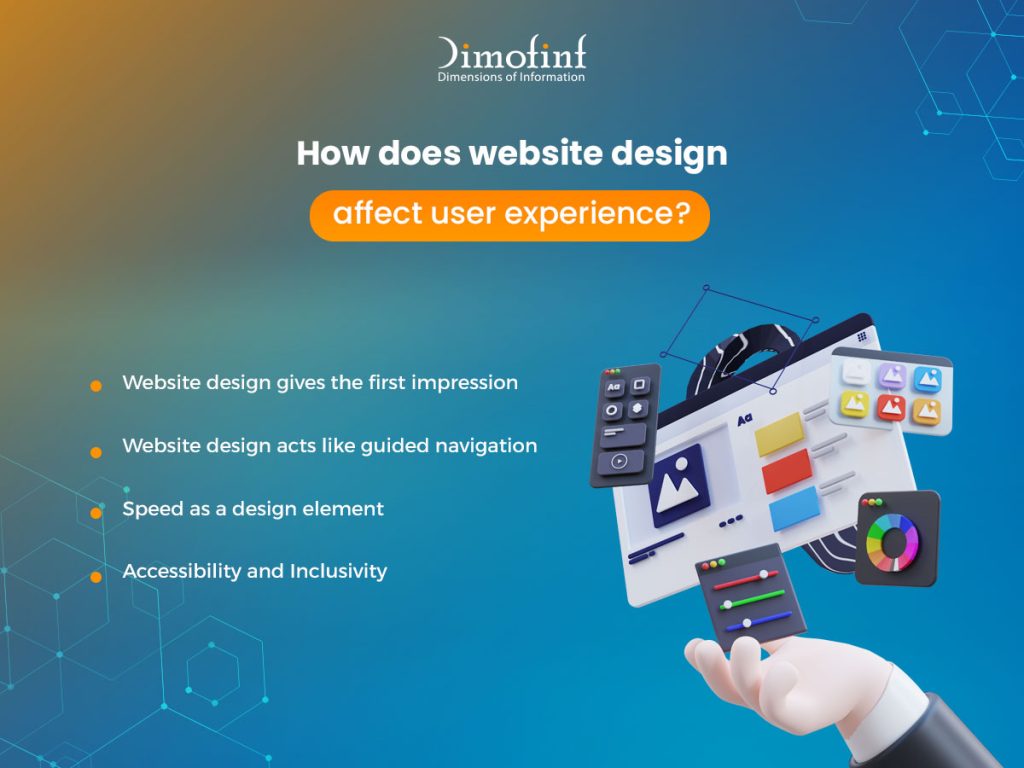
Website design gives the first impression
Psychological studies showed that user takes about 0.05 seconds to form an opinion about your website. If a site looks outdated or broken with misaligned text and low resolution images, users subconsciously project that lack of care onto your product or service.
Website design acts like guided navigation
UI-UX Designers use visual hierarchy to tell the user’s eyes where to go first. Most users scan web pages in an “F-Pattern” horizontally across the top, then down the left side with shorter horizontal bursts.
By placing your most important information and your Call to Action (CTA) along these natural scanning lines, you increase the likelihood of conversion.
Speed as a design element
Website Design affects speed through the use of heavy images, complex scripts, or unnecessary animations. For every second of delay, conversion rates can drop by double digits. A “UX-first” design prioritizes performance just as much as aesthetics.
Accessibility and Inclusivity
Website design affects UX by determining who can use your site. Using high-contrast colors and readable font sizes ensures that users with visual impairments or those viewing your site in bright sunlight can still navigate.
On mobile, if buttons are too small or too close together, the UX becomes frustrating, leading to rage click and site abandonment.
In the end, choosing the perfect style among the main types of website design is not about picking the coolest tech, it’s about matching your tools to your goals. Besides prioritizing speed, accessibility, and intuitive navigation, you are building a relationship with your audience in an era where attention is the most valuable currency.
Partner with Dimofinf to get a professional website design that blends cutting-edge aesthetics with flawless user functionality. Let us help you build a platform that turns them into lifelong customers.
Share this article

How to Create a Website Using Free Web Hosting Step by Step

shared hosting vs vps hosting: Which one is better for your business?

What Is a Ransomware Attack? Definition, Examples & Prevention

Everything You MUST know about DoS and DDoS attack

best web hosting server